
Two fields.
One shared question.
What can we understand when we see biology differently?
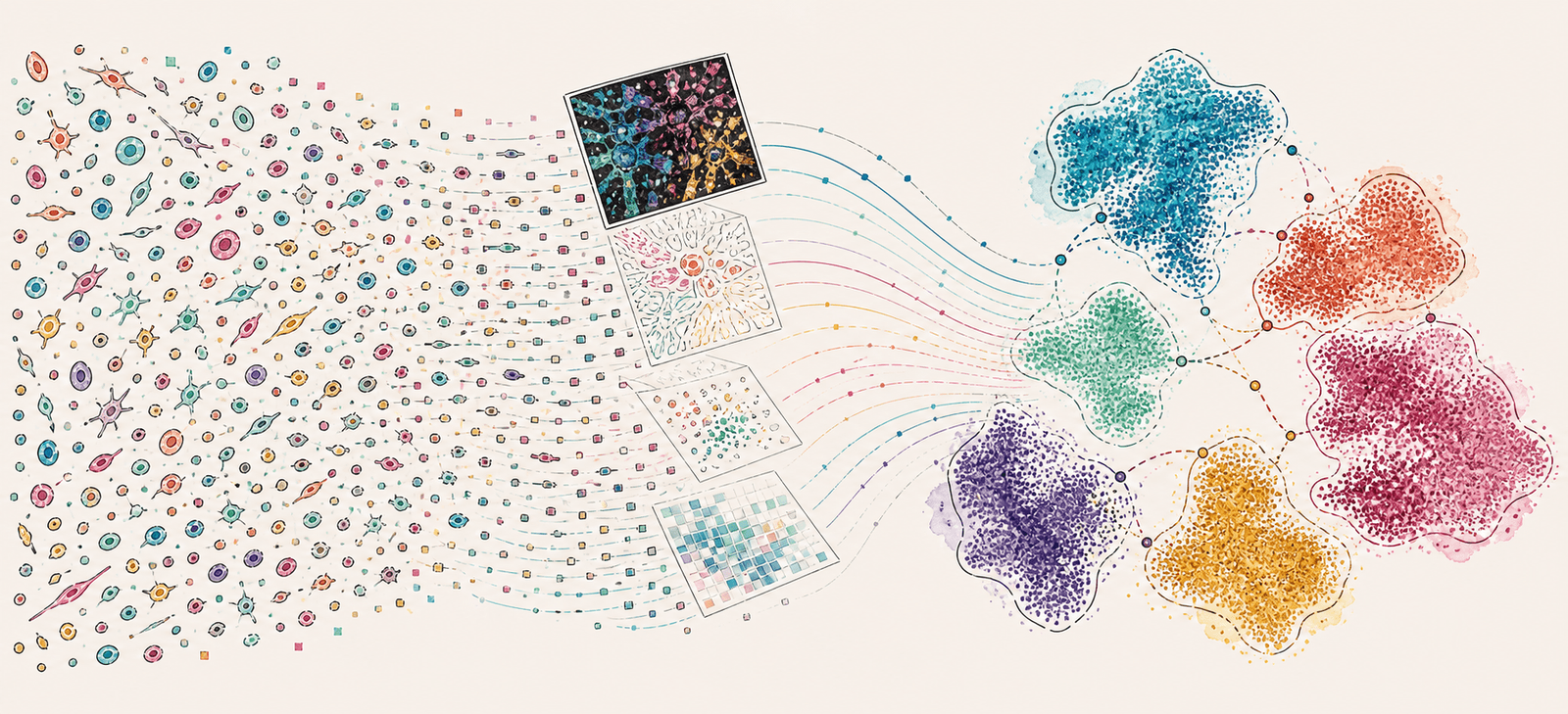
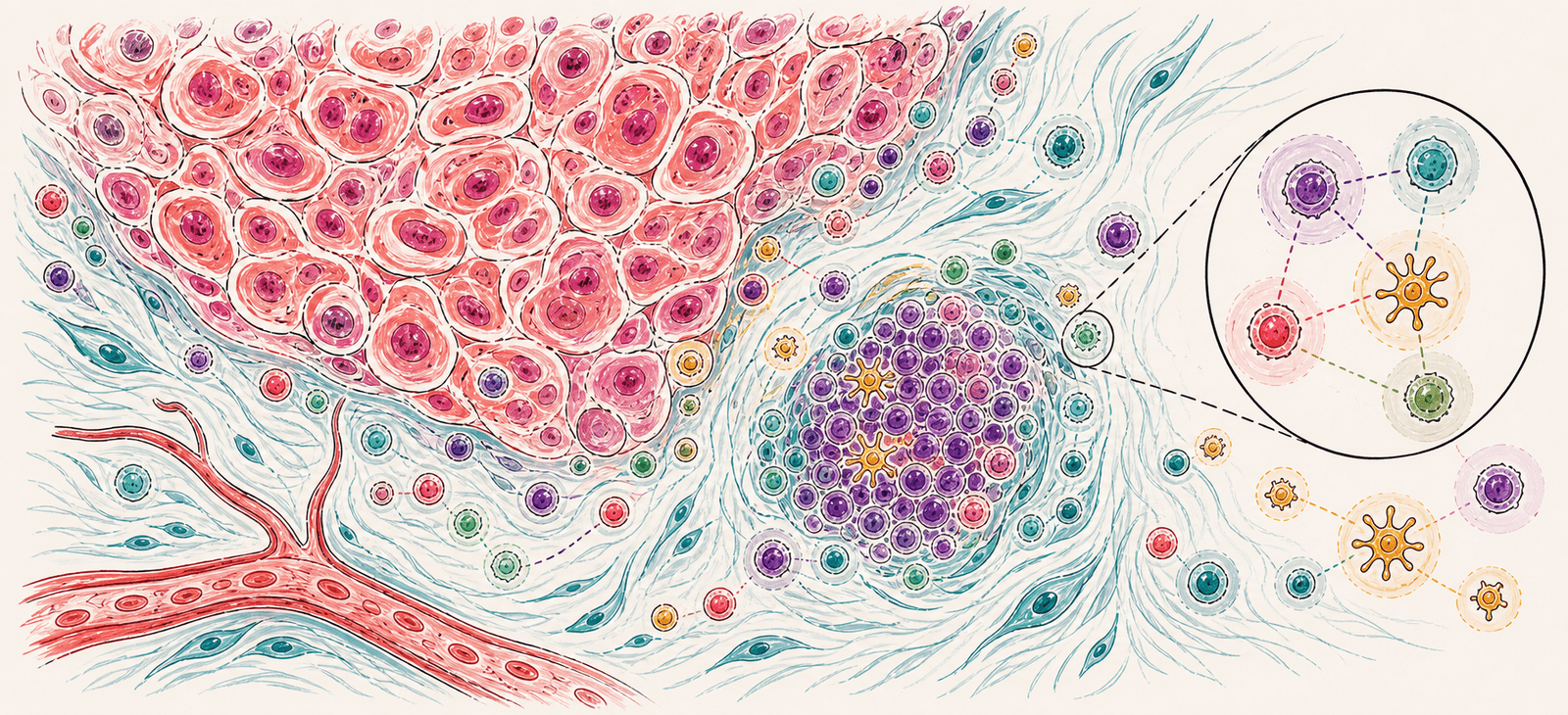
ImmunoQs grew from two ways of seeing biology. One found patterns through computation, imaging and machine learning. The other found meaning through immunology, pathology and spatial biology.
Different disciplines. Same curiosity. The interesting part happened where they met.
Lit Hsin Loo, PhD
His research uses imaging, computation and machine learning to find patterns at scale, turning complex biological data into measurable insights about how cells behave.
Joe Yeong, PhD, FRCPath (UK)
His research looks at where cells are, who they're interacting with, and what those relationships reveal about disease.
Two ways of seeing biology.
Much more interesting together.
One taught machines to find patterns. The other learned to read them in tissue. ImmunoQs grew where the two met.
See what we built →The science behind us, published.
Spatial multiomics approaches for antibody-drug conjugate target discovery
10.1016/j.cpblue.2026.100085 →Same-Slide Spatial Multiomics Integration with IN-DEPTH Reveals Tumor Virus–Linked Spatial Reorganization of the Tumor Microenvironment
10.1158/2159-8290.CD-25-0775 →Clinical outcomes in phase 1 study of EBC-129, a first-in-class, anti-N256-glycosylated CEACAM5 and CEACAM6 ADC, in patients with gastroesophageal adenocarcinomas
10.1200/JCO.2026.44.16_suppl.3033 →Spatially-guided metabolomics profiling of metabolic regions in human tumor tissues
10.1038/s44320-026-00205-w →Multiomics and multi-region spatial transcriptome analysis reveal cellular networks and pathways associated with HCC recurrence
10.1016/j.jhepr.2026.101790 →FAST: Scalable Factor Analysis for Spatial Dimension Reduction of Multi-section Spatial Transcriptomics
10.1093/gpbjnl/qzag006 →Single-Cell Profiling: Any Scale, Any Size, All at Once
10.1002/advs.202518479 →The application and prospects of spatial omics technologies in clinical medical research and molecular diagnostics
10.1016/j.jgg.2025.09.003 →An integrated approach for analyzing spatially resolved multi-omics datasets from the same tissue section
10.3389/fmolb.2025.1614288 →Spatial immune scoring system predicts hepatocellular carcinoma recurrence
10.1038/s41586-025-08668-x →Spatial omics techniques and data analysis for cancer immunotherapy applications
10.1016/j.copbio.2024.103111 →Choice of PD-L1 immunohistochemistry assay influences clinical eligibility for gastric cancer immunotherapy
10.1007/s10120-022-01301-0 →Leveraging advances in immunopathology and artificial intelligence to analyze in vitro tumor models in composition and space
10.1016/j.addr.2021.113959 →These papers are the work of independent academic labs at A*STAR. They are listed here to show the scientific lineage behind ImmunoQs, not as ImmunoQs publications. For work carried out on our platform, see Publications.